
Enhancing Leadership Skills With Immersive Business Simulations For Strategic Decision Making
Enhancing leadership skills through interactive tabletop simulations, build decision rights, escalation triggers, and calm comms when facts are messy.
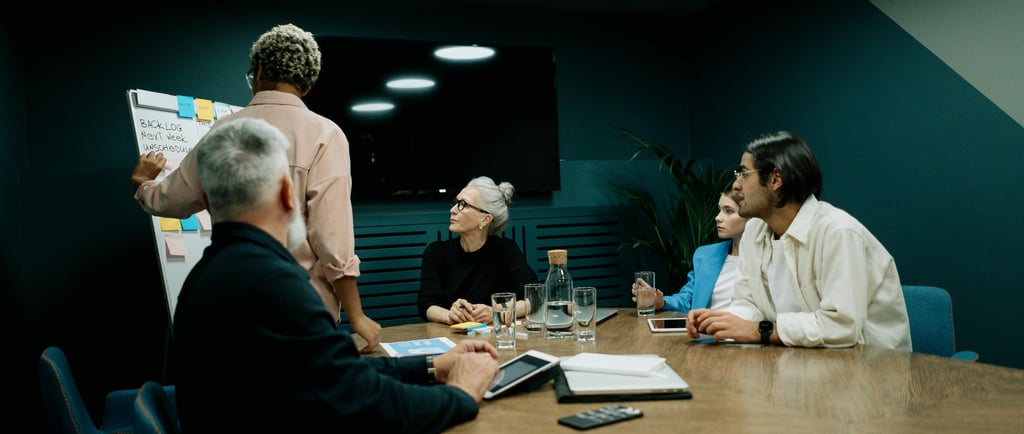
The room gets quiet. Someone says, "We don't have enough facts yet." Another person asks, "Who is actually making the call?" Slack threads multiply, legal wants certainty, ops wants speed, comms wants guardrails, and the clock keeps moving.
Boards and executive teams know this feeling from leadership simulations. The risk is not that leaders are careless. The risk is that the decision system breaks first.
Interactive tabletop simulations are guided, story-based experiential learning practice sessions with real decisions and consequences. When done well, they create a safe place to rehearse how you lead when time is short and the facts are messy. This is the practical case for enhancing leadership skills through interactive tabletop simulations, what makes them work, which skills they build, and how to run one that senior leaders respect.
Key takeaways you can use after one tabletop simulation
Decision rights get explicit: one named owner per high-stakes crisis management call, sharpening decision-making skills with fewer "we all agree" stalls.
Escalation triggers get cleaner: clear thresholds for when the board is notified and when teams act.
Alignment speeds up: fostering strategic thinking with fewer parallel conversations and fewer conflicting priorities.
Communication ownership becomes visible: who speaks, who approves, and who handles team management for internal team updates.
Risk turns measurable: teams define "stop rules" instead of arguing opinions.
The first 30 minutes improve: faster containment actions and a steadier cadence.
It supports strategy too: use it to pressure-test transformations, vendor dependencies, or AI governance, not only crises.
What makes interactive tabletop simulations different from a normal leadership workshop
A normal workshop talks about leadership. A good tabletop simulation forces leadership.
In a simulation, you do not discuss a decision in the abstract. You make it in a safe environment with limited information, under time pressure, while tradeoffs stack up. The core mechanics are simple: a scenario, assigned roles, timed injects (new facts), imperfect dashboards, and real consequences that show up as the story unfolds. Then a disciplined debrief turns those choices into changes with owners.
This is why many executive teams are upgrading their approach to business simulations in 2026. Sessions are getting shorter (often 60 to 120 minutes), but more intense. Scenarios are also getting more realistic, featuring realistic scenarios with simulated news clips, social posts, and operational dashboards. Finally, feedback is becoming more data-driven, because facilitators can track decision timing, reversals, and escalation patterns, then compare them across runs. For a current executive view of what makes tabletops valuable, see Forrester's guidance on effective executive tabletop exercises.
If you want the readiness model behind this approach, start with simulation-based readiness. It frames practice as shared decision instincts, not check-the-box activity.
A simple mental model: decisions, not discussions
Think in a decision sequence, not a conversation.
First, decide what must be true right now. Next, decide what can wait. Then decide what triggers escalation. That sequence keeps the room out of debate loops.
A simulation makes this visible fast because the story keeps moving. For example: "Do we shut it down, ship anyway, or pause for more facts?" That one choice fits cyber incidents, vendor failures, AI issues, and operational disruptions. The point is not the "right" answer. The point is having a repeatable decision-making process to pick an answer, on time.
Why leaders learn faster when consequences show up right away
People remember stories more than slides. They also remember how it felt when the timer hit zero.
Stress reveals habits. Some leaders default to consensus. Others go silent. Some over-escalate, while others delay. A simulation turns those patterns into something you can see and coach.
That is also why trust and psychological safety improve. Teams stop guessing how others behave under pressure because they've watched it happen. You practice accountability before customers, regulators, or the board are watching.
The goal is not perfect performance. The goal is fewer surprises, and faster recovery, when it counts.
The leadership skills you build in a good tabletop sim, and how to spot real improvement
A strong tabletop fosters skill development by building four things senior teams need: clarity, calm, alignment, and governance. The tell is whether facilitated debriefs show the team getting measurably better between runs, not whether the session "felt engaging."
Look for improvement you can point to in minutes, not months:
Are decisions made within a time box?
Do leaders agree on thresholds?
Does the team produce one coherent narrative?
Behind those outcomes are a few specific skills.
Decision rights and escalation: who owns which call when the clock is ticking
Uncertainty breaks authority first. When people fear blame, they start asking for more voices. Then the meeting becomes the decision.
Three signs decision rights are weak: a meeting spiral, duplicated work across functions, and conflicting messages to stakeholders. The fix is simple, but not easy. You map ownership before the next high-stakes moment forces you to improvise. Use a decision rights map template to assign one decision owner per call, define required consults, and set escalation triggers.
Clear communication under stress: one story, one voice, fewer surprises
Tabletop simulations expose how stress reveals gaps in emotional intelligence, a common leadership blind spot: internal comms and external comms are different products. They need different timing, different approvals, and one shared truth.
In a good sim, leaders rehearse message discipline. They answer "message owns" questions out loud, under pressure. For example: Who informs regulators if a threshold is crossed? Who updates employees when rumors start? Who briefs the board, and how often?
When ownership is unclear, drafts multiply and confidence drops. When ownership is clear, the team moves with fewer unforced errors.
Better judgment with imperfect facts: using thresholds and stop rules
Senior teams rarely fail because they lacked data. They fail because they waited for certainty.
Simulations teach leaders to use thresholds. What would make us pause? Notify? Roll back? Escalate? That turns risk into a set of decision triggers.
A simple pattern to practice in every scenario:
State what we know.
Name what we do not know.
Pick the next decision with a time box.
If you want the learning science behind tabletop simulation, this overview of educational principles in tabletop simulation is a useful reference.
Faster alignment across functions: handoffs that do not drop the ball
Cross-functional friction is not a personality issue. It is a system issue.
Legal, ops, security, HR, finance, and comms operate on different clocks. A simulation forces those clocks onto the same wall for better change management. You see where handoffs stall, where information gets lost, and where conflict resolution improves as two teams assume the other team "has it."
The improvement signal is concrete: fewer side channels, fewer duplicated updates, and faster execution after a decision is made.
How to run a tabletop simulation that leaders respect, not tolerate
Leaders will tolerate theater. They will respect high-value practice, like that in executive education, that saves time later.
Start by choosing a scenario where decision latency would cost you the most, requiring strong business acumen. Options range from cyber and AI to vendor failures and transformation governance. If you want examples built for executive decision-making, review business decision simulations. For a ready-to-run third-party scenario, the vendor failure drill kit is a practical starting point that fits well within leadership development programs.
Keep the operating recipe simple:
Choose the scenario, set roles, set rules, run timed injects, capture decisions, debrief, assign owners. Timebox the full session to 60 to 120 minutes. Otherwise, it turns into a meeting.
A good design guide for structure is this step-by-step tabletop exercise guide. Use it as a baseline, then tighten it for executive time and board expectations.
Set the room up for good behavior: roles, guardrails, and time boxes
Pick a facilitator who will protect the clock. Name a decision owner for the scenario. Assign a scribe who captures decisions, timestamps, and rationale.
Define what "done" looks like before you start. For example, a short list of decisions, a comms posture, and the top three follow-up actions with owners.
Pressure should feel real, but the room must stay psychologically safe in a risk-free environment. The point is to stress the system, not to embarrass people.
Debrief like a board: what we decided, why, and what changes next
Debrief is where leadership development becomes operational change. Ask:
What did we decide, and when?
What slowed us down the most?
Where did decision rights get fuzzy?
Which thresholds were missing or unclear?
What will we change in our strategic planning in the next 30 days?
To keep the output crisp, use a sample board-ready readout format. It helps you summarize outcomes without drowning in detail. If handoffs were a major failure mode, map them explicitly with the cross-functional handoff map worksheet.
FAQs about building leadership skills with interactive tabletop simulations
How often should we run simulations?
Quarterly works for many teams to support knowledge retention. Run sooner if you changed leaders, vendors, or core systems.
Who should be in the room?
The people who make or block decisions in professional learning scenarios. That usually includes an exec sponsor plus legal, ops, comms, and the risk owner.
How do we measure impact?
Track decision time, escalation timing, message consistency, immediate feedback, and whether actions ship after the debrief.
Virtual or in-person?
Both can work. In-person is better for tension and speed, while a virtual environment is easier to schedule across time zones.
How do we avoid check-the-box exercises?
Timebox decisions, record them, and require owners and dates in the debrief for an engagement boost.
Conclusion
When the room gets tense, leadership is not a speech. It is a sequence of decisions. Interactive tabletop simulations build decision readiness by making roles clear, tightening thresholds, speeding cross-functional alignment, and strengthening board oversight without turning directors into operators.
If you want a structured way to run these tabletop exercises and turn outcomes into owned improvements, SageSims provides decision readiness services built for boards and senior teams.
Pick one high-stakes scenario your organization cannot afford to mishandle. Then commit to one leadership simulation and one short fix list. Schedule a readiness call to launch immersive simulations and set the date: book a readiness call.