
The first 30 minutes runbook
Turn “incident response” into first-move execution.
Run it once in 30 minutes. Tighten it after one short rehearsal.
No spam. Unsubscribe anytime. We will email the runbook plus a short set of follow-ups on decision readiness.
Reduce decision latency in the minutes that matter most.
Establish one war room, one timeline, and a clean decision log.
Set comms cadence and board thresholds early so nobody gets surprised.
Why this matters now
Most incidents become expensive when the organization loses time. Not because people are lazy. Because decision rights are unclear and messaging becomes inconsistent.
This runbook cuts confusion fast. It protects trust. It creates a simple audit trail of decisions, timing, and ownership.


What's inside
A War Room Launch Script
A read it out loud opener that establishes control. One room. One narrative. One cadence.
A Minute by Minute Kickoff Sequence
A 0 to 30 minute flow that forces shared reality, fast containment decisions, and a clear next update time.
Roles and Ownership With no Gaps
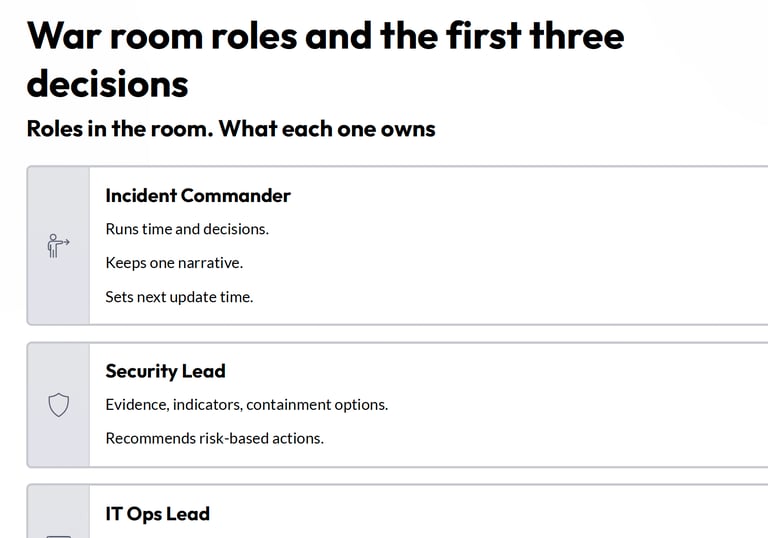
A tight list of required roles, including an Incident Commander and a Scribe who logs every decision and timestamp.
The First Three Decisions
Severity. Containment posture. Comms posture. Each has an owner and a time box.
Comms and Board Threshold
Cadence rules, customer impact rules, and when to notify the board or the audit and risk chair.
Runbook preview
Here is what you will get. Three quick previews so you can judge fit fast.
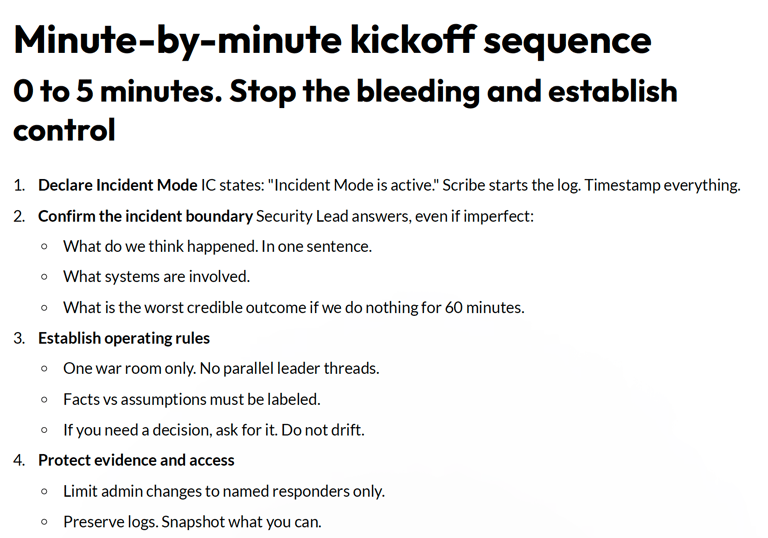
The 0 to 30 Minute Sequence
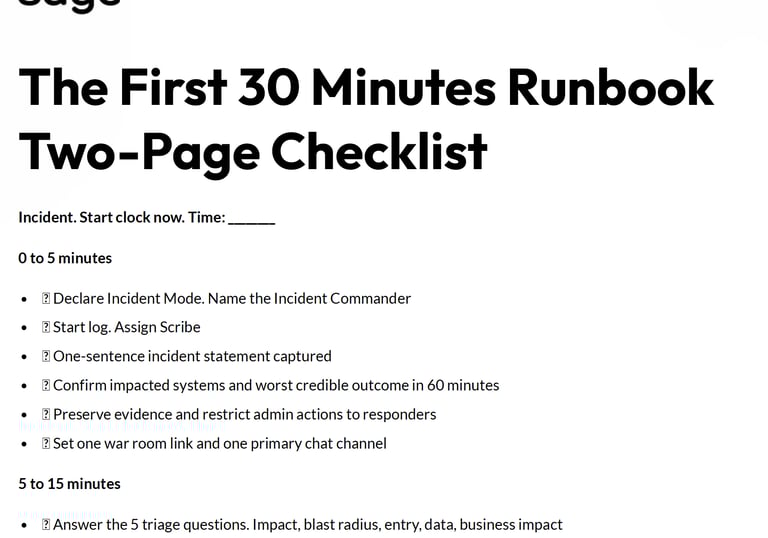
A simple timeline with deliverables at minute 5, 15, and 30.
The Roles and First Three Decisions
Clear owners and time boxes so you stop debating who is allowed to decide.
A print ready version you can keep with your incident materials and use in the room.
The Two Page Checklist
Who the template is for
Best for
CEOs, COOs, CROs, General Counsel, Audit and Risk leaders
CISOs, Heads of Security, IT leaders, Incident Response leads
Comms leaders, Operations leaders, Business continuity owners
Activated when
Customer impact is active or likely
Sensitive data exposure is suspected
A critical vendor is involved
You cannot answer what happened with confidence in 10 minutes
There is a credible path to public attention or board scrutiny


How to use the template (3 steps)
Assign names to the required roles before you need them. Especially Incident Commander and Scribe.
Run it once as a rehearsal with your real leaders. Thirty minutes. No slides.
Repeat quarterly, or after major org changes, vendor changes, or platform shifts.


Quick FAQs
Is this only for cybersecurity incidents?
No. Use it for any event that could create operational impact, data exposure, safety risk, financial loss, regulatory reporting, or public attention.
Is this a technical playbook
No. It is not a forensic guide. It does not replace your IT runbooks. It is the executive layer that drives speed, alignment, and comms discipline.
How do we know when to activate it
Activate when customer impact is active or likely, data exposure is suspected, a critical vendor is involved, you cannot explain what happened fast, or leadership could get asked about it today.
Who should be in the war room
Roles matter more than titles. You need an Incident Commander, Security, IT Ops, Legal, Comms, a business owner, an exec sponsor, and a scribe.
How does this help the board
Boards do not need technical detail in the first 30 minutes. They need confidence that control exists. This runbook makes leadership behavior inspectable and supports later review with a timeline and decision log.
How often should we run it
Quarterly is a solid default. Also run it after major org, vendor, or platform changes.
Ready to run the first 30 minutes without chaos
One war room. One narrative. One cadence. Clear decisions. Clean comms. Less surprise.

